Broken Garage Door Spring in Phoenix? What to Do Right Now (and What Not to Touch)
It usually happens without warning: a loud bang from the garage, and the door suddenly won't open or feels far too heavy to lift. That's almost always a broken spring. Here's how to confirm it, what to do in the next few minutes, what to leave alone, and what a safe replacement involves.
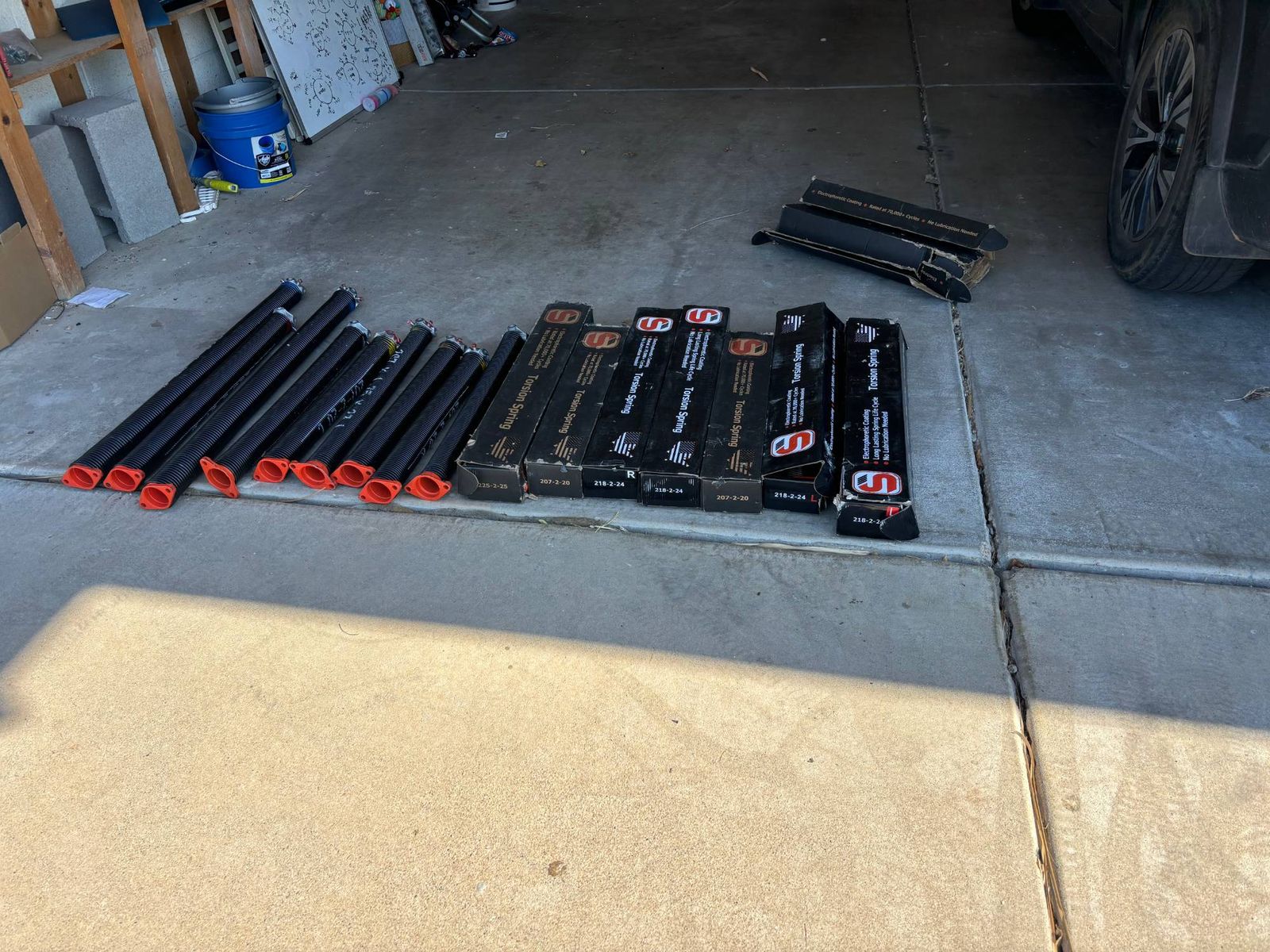
Signs a Spring Just Broke
- A loud bang, like a firecracker, from the garage
- A visible gap in the coils of a spring above the door
- The door won't open, or rises only a few inches and stops
- The opener hums or strains, but the door barely moves
- The door looks crooked, or a cable is hanging loose
- The door feels extremely heavy if you try to lift it. Don't keep trying.
What to Do Right Now
- Stop using the opener. Running it against a broken spring can damage the motor, gears, or rail.
- Leave the door where it is. Don't try to lift it or force it down.
- Don't pull the red emergency release while the door is open. Without a working spring, the door can drop.
- Keep kids, pets, and cars clear of the door and its path.
- If your car is stuck inside, leave it there until the spring is replaced.
- Call or text (602) 637-9444. We answer 24/7.
What Not to Touch
Garage door springs, lift cables, and bottom brackets all hold a large amount of stored energy. Loosening the wrong bolt or trying to wind a spring without the right tools and training can release that energy all at once and cause serious injury. That's why we don't publish do-it-yourself spring instructions, and why these parts are best left alone:
- Torsion springs and the winding cones at their ends
- Lift cables and the cable drums on the torsion bar
- Bottom brackets, where the cables attach to the door
- Extension springs and their pulleys, on older doors
Torsion or Extension: Which Spring Do You Have?
Most newer doors use torsion springs: one or two large springs on a metal bar right above the door. Older doors may use extension springs that stretch along the horizontal tracks on each side. Extension springs should each have a safety cable running through them so a broken spring can't whip loose. If yours don't, ask us to add them.
Should Both Springs Be Replaced?
If your door has two springs and only one broke, replacing both is usually the better choice. They've been through the same number of cycles, so the second one is often not far behind. Replacing them together also keeps the door evenly balanced.
Standard vs. High-Cycle Springs
Standard torsion springs are commonly rated for about 10,000 open-and-close cycles, roughly 7 to 10 years of daily use for many households. High-cycle springs use heavier wire and are often rated for 20,000 cycles or more. They cost more up front, but they're worth considering if the garage is your main way in and out of the house. If anyone offers you a "lifetime" spring, ask exactly what the coverage includes. We'll explain both options and the price of each before any work starts.
What a Professional Replacement Involves
- Matching the spring size to your door's weight and height
- Safely releasing any remaining tension and removing the broken spring
- Installing the new springs and checking cables, drums, rollers, and bearings
- Balancing the door, then testing the opener's safety reverse and sensors
Springs, cables, and rollers are always on the truck, so most spring replacements are finished in one visit. There's no service-call fee, and you get the price for each option before any work begins.
Why Springs Break
Most springs simply wear out. Every open-and-close cycle flexes the steel, and after thousands of cycles it fatigues and snaps. A door that's out of balance, worn rollers, or dry hardware add extra strain. A yearly tune-up won't make a spring last forever, but it can catch problems before the door gets stuck.
Spring just broke?
Call or text 24/7. No service-call fee, and the price comes before any work.